
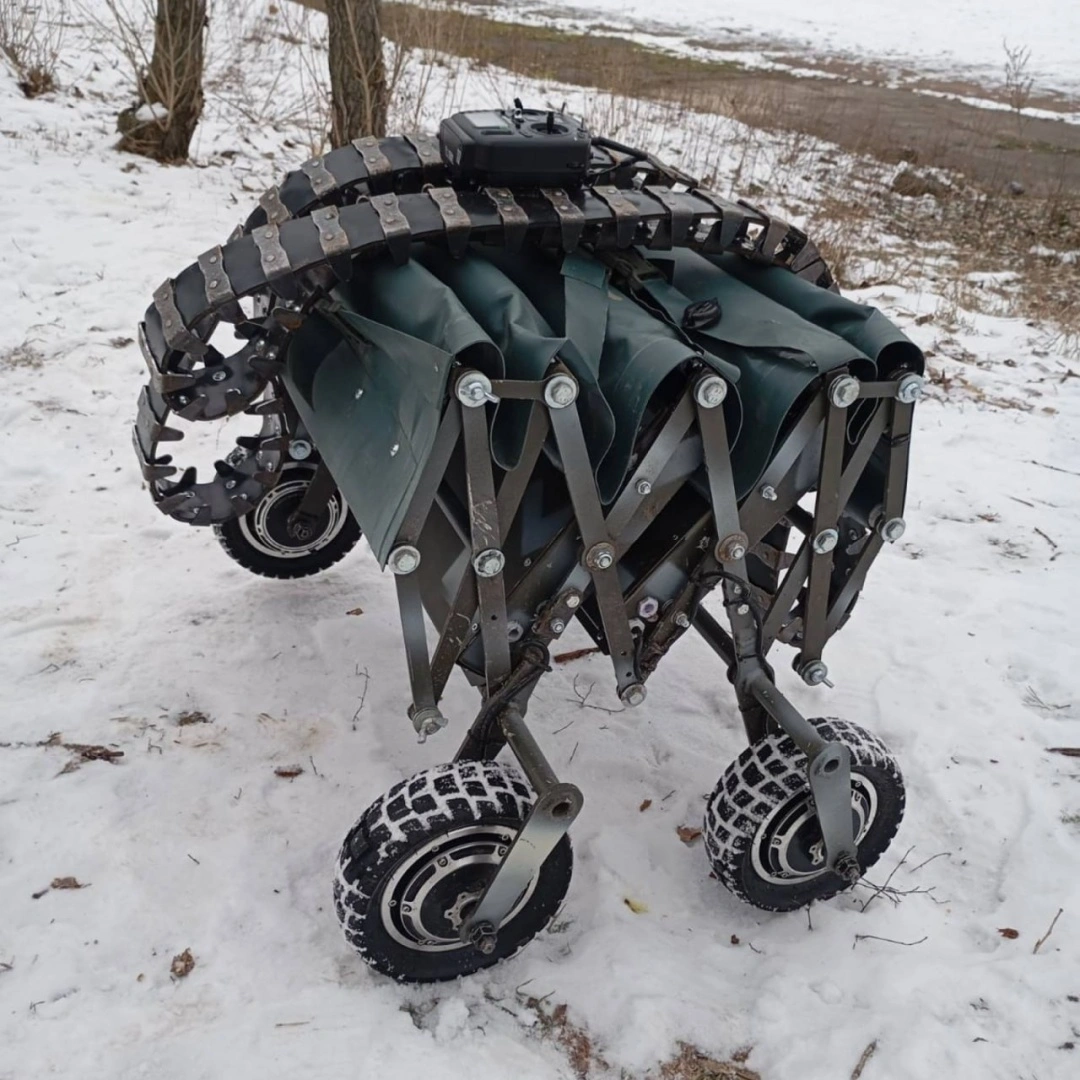
This is one of the most striking and effective initiatives that has changed the very philosophy of battlefield survival, introducing technologies that were previously considered impossible in the conditions of intense warfare.
The creation of ground robotic platforms (GRP) has not only automated one of the processes on the battlefield, but has also radically changed the philosophy of modern disaster medicine, implementing a new humanistic paradigm - the maximum preservation of human life with the help of technology.
As is known, the evacuation of one seriously wounded soldier from the front line (the “Care Under Fire” and “Tactical Field Care” stages) requires the involvement of 4 to 6 physically strong military or combat medics. Accordingly, during dense fire, the work of enemy FPV drones and artillery, the evacuation group becomes a priority target, that is, saving one life, we risk losing six more rescuers. Instead, the robotic platform independently drives to “zero”, picks up the wounded and takes them to a safe zone.
Overcoming the “golden hour” factor is extremely important in this case. In tactical medicine, time is of the essence: the faster massive bleeding is stopped and the wounded person is transported to a stabilization point, the higher the chances of survival and the lower the risk of amputation.
NRPs take place where wheeled vehicles burn out, and a person with a heavy load is unable to quickly run through mud, debris or minefields. The robots do not get tired, do not give in to panic and psychological shock from shelling. They are able to carry out evacuations day and night, in any weather conditions, reducing transportation time by several times.
One of the brightest and most effective initiatives that changed the very philosophy of survival on the battlefield, introducing technologies that were previously considered impossible in conditions of intense war
This is not just one successful invention, but an entire ecosystem of developers coordinated by the state cluster Brave1. This is a unique association of engineers, IT specialists, scientists and volunteers who integrated feedback directly from the front, adapting platforms (such as Ratel, TerMIT, FoxTac and others) to the real needs of combat medics; created low-profile, inconspicuous in the thermal imaging spectrum and resistant to electronic warfare vehicles that imperceptibly take people out from under the enemy's nose; launched large-scale production in conditions of constant missile threats, guided by a single motivation - to save as many Ukrainian defenders as possible.